




















Must the Apocalypse Disappoint? Philosophers in the Midst of Climate Change and Before
Abstract
When humanity faces the possibility of self-destruction, is survival the only meaningful question left? Or should we also ask whether different kinds of “ending” exist—some imposed by a few, others emerging from collective agency? Could there be a form of human self-extinction that expresses unity and autonomy rather than division and coercion?
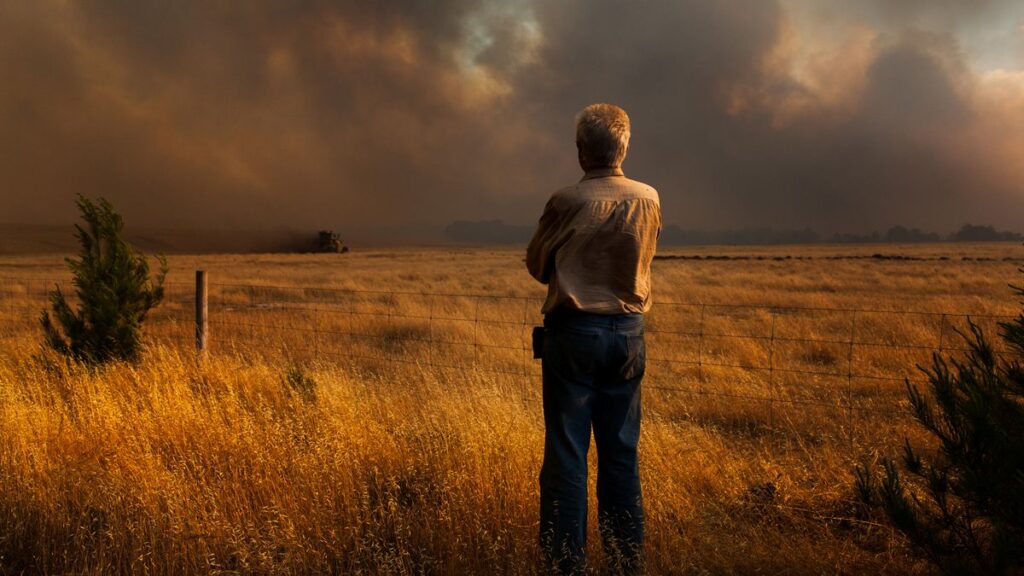
A contemporary observer—perhaps a young philosopher involved in post-disaster environmental work—might encounter a fragment of text among the ruins of a climate catastrophe. The message is unclear in origin but striking in content: humanity, it suggests, has created the conditions of its own potential annihilation. Because this threat is self-produced, it also appears, at least in principle, to be within human control—something that might be prevented or allowed to unfold.
This idea, however, does not belong only to the present. It echoes earlier reflections, particularly those of Günther Anders, who wrote in the context of nuclear fear during the mid-twentieth century. For Anders, the “apocalypse” is no longer a singular event in time but a structural possibility embedded in modern existence itself. Time is no longer neutral; it becomes shaped by the constant possibility of catastrophe. Human history thus enters what he calls a “state of reprieve”—a condition suspended between continuation and self-erasure.
Yet this apocalyptic condition is not simply about events that may or may not occur. It raises deeper philosophical problems about causality, responsibility, and recognition. Humans create systems—technological, economic, political—that generate consequences beyond their control or even comprehension. The result is a paradox: humanity produces its own potential destruction, yet cannot fully recognize this production as its own act.
This leads to a key tension in Anders’ thought. If humanity is both the source and potential victim of its own annihilation, can we still meaningfully speak of collective agency? The idea of a unified humanity deciding its fate becomes questionable. Social and political divisions mean that “humanity” is not a single actor but a fragmented field of competing interests. Self-destruction, therefore, cannot be understood as a voluntary collective suicide.
From this perspective, apocalypse is not a conscious act but a structural outcome of technological and social processes. It is both everywhere and nowhere: produced by human activity, yet not fully owned by any subject. This is why Anders rejects interpretations that treat human self-annihilation as a deliberate, unified decision. Such views, he argues, falsely project coherence onto a fundamentally divided reality.
The problem becomes even more complex when considering attempts to overcome or redeem this condition. Some philosophical traditions imagine a form of collective rationality or political unity—sometimes framed in communist terms—that could transform humanity into a self-aware subject capable of mastering its own destructive powers. In this view, apocalypse could be reinterpreted as a moment of total self-recognition: humanity confronting its own capacity for destruction and thereby achieving unity.
But Anders remains skeptical. For him, the very conditions that make destruction possible—technological power, economic expansion, social fragmentation—also prevent any stable form of collective control. Even attempts to manage or redirect these forces risk reproducing the same dynamics they seek to overcome.
In this sense, the “disappointment” of the apocalypse is not simply that catastrophe may or may not happen. It is that even our efforts to understand, prevent, or redeem it are caught within the same structures that generate it. Every act of avoidance already belongs to the system of possibility that includes destruction.
As a result, recognition always arrives too late. We understand the danger only once it has already been integrated into the fabric of our world. The possibility of catastrophe becomes so general that it loses the clarity of a singular warning. It is no longer something we can clearly identify as an external threat; it becomes a condition of modern life itself.
This paradox also destabilizes the idea of responsibility. If everyone and no one contributes to the conditions of catastrophe, then agency becomes diffuse. Humanity appears both powerful and powerless: capable of producing global transformation, yet incapable of mastering its consequences.
At this point, some thinkers—such as Maurice Blanchot—propose a different approach. Instead of treating apocalypse as either a coherent collective act or a meaningless accident, they explore the tension between these two extremes. For Blanchot, the possibility of total destruction reveals not the unity of humanity but its internal fragmentation. A truly unified collective subject does not yet exist, and perhaps never fully will.
From this angle, the idea of a “fulfilling apocalypse”—one in which humanity consciously realizes its unity through self-destruction—becomes highly problematic. It assumes a level of coherence and self-knowledge that humanity does not possess. Instead of a meaningful end, we are left with a kind of empty or “senseless” ending: an event that occurs without becoming fully intelligible as an act.
Still, the question persists: is there a form of collective transformation in which humanity could confront its destructive capacities without falling into illusion? Could there be a way of thinking about catastrophe that neither romanticizes it nor reduces it to accident?
This is where climate change complicates the picture. Unlike nuclear war, which was once imagined as a sudden, deliberate act, climate catastrophe unfolds gradually, distributed across countless actions and systems. It is both slow and total, both visible and abstract. It reinforces the sense that modern catastrophe is not an event we choose, but a process we inhabit.
In this situation, the distinction between action and non-action becomes blurred. Even efforts to resist destruction may unintentionally reproduce the systems that cause it. What counts as prevention may also function as continuation. What appears as care may also stabilize the conditions of harm.
Thus, the central philosophical tension remains unresolved: if humanity cannot act as a unified subject, and if its actions always exceed its intentions, then what does it mean to “avoid” its own disappearance? And if avoidance itself is structurally entangled with the very processes it resists, can we still meaningfully distinguish between success and failure?
Perhaps the deeper issue is not whether apocalypse will happen, but how we interpret the condition in which its possibility has already become permanent. In this sense, the “apocalypse” is not only an anticipated end, but a framework through which modern existence understands itself—always too late, always partially aware, never fully in control.